
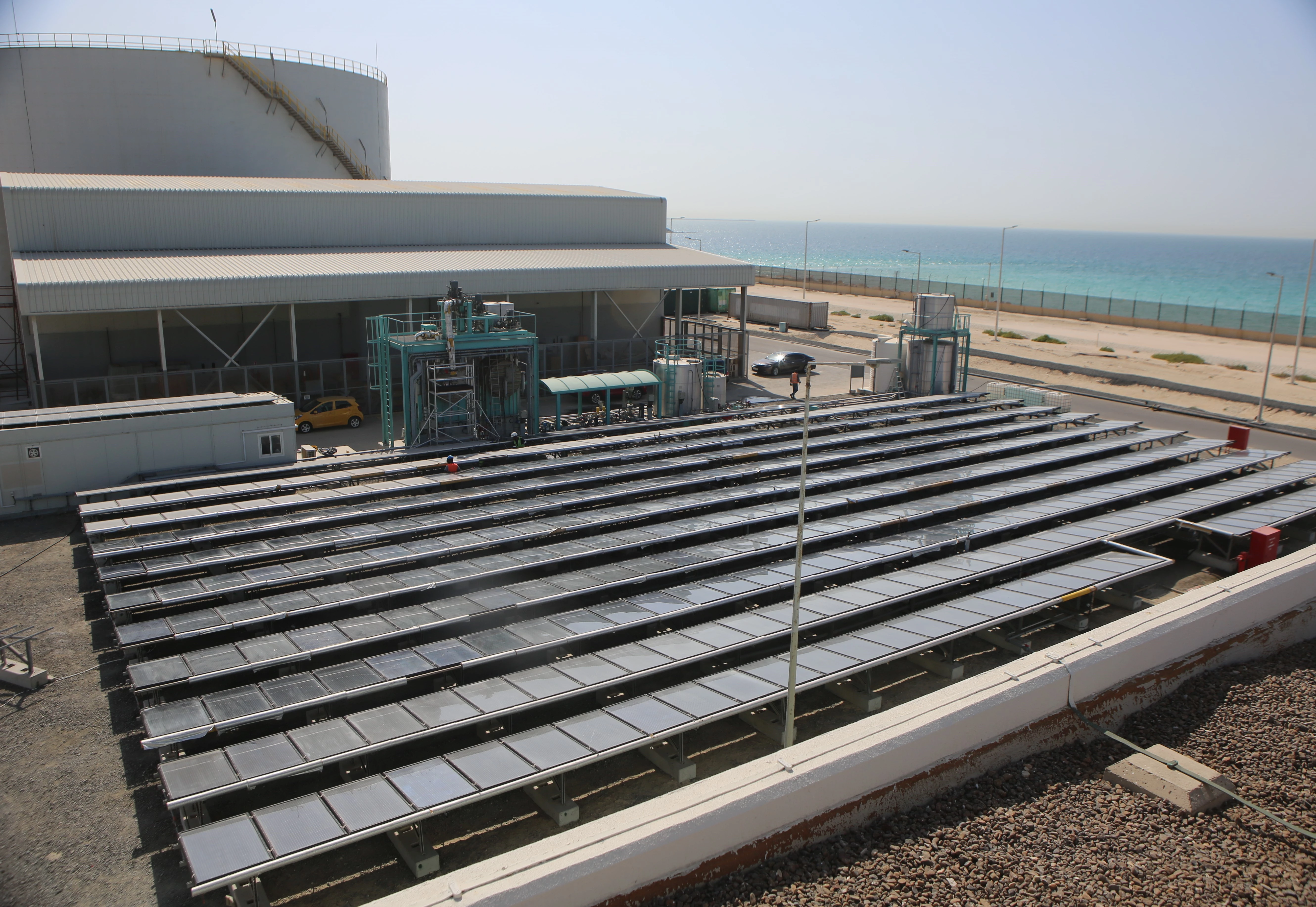
Traditional solar desalination often falters when faced with real-world contamination. Coastal waters near industrial hubs frequently contain oil, which fouls standard membranes and renders laboratory-tested solutions ineffective. Professor Sanghyun Jeong and his team addressed this by developing an asymmetric hydrogel membrane that separates oil and evaporates water simultaneously.
The membrane utilizes a dual-sided design to prevent functional interference. The hydrophilic side, composed of chitosan and polyvinyl alcohol, acts as a barrier to oil droplets. The hydrophobic side, embedded with copper oxide nanoparticles, captures solar energy to drive evaporation. In testing, the device removed 99.99% of oil contaminants and reached an evaporation rate of 1.29 kilograms per square meter per hour—nearly triple the efficiency of conventional single-layer alternatives.


Comments (0)
No comments yet. Be the first!