
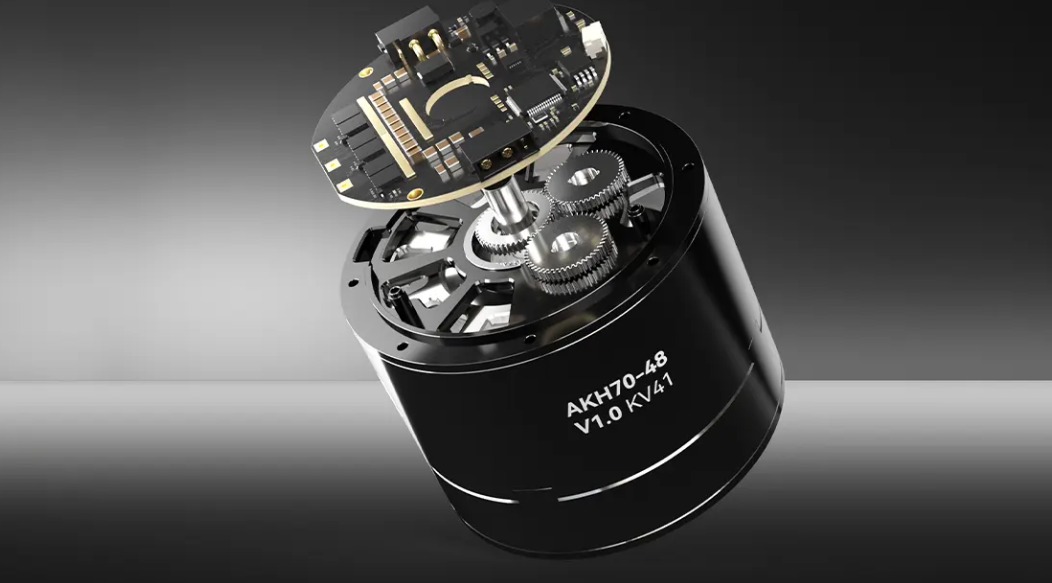
As Vision-Language-Action models grow more sophisticated, the bottleneck for humanoid robots has shifted from software intelligence to mechanical latency. Real-world variables like heat, friction, and nonlinearities often derail the performance seen in simulations. By embedding sensing and control directly into the hardware, HIGEN RNM aims to bypass the delays inherent in round-trip processing through a central controller.
The new architecture features six standardized joints, ranging from 60 Nm to 348 Nm, suitable for everything from delicate wrists to load-bearing hips. Each unit integrates AFPM motors, dual encoders, and 3K compound planetary gearboxes. By utilizing dual-encoder data and motor-current sensing, the system estimates external forces without needing dedicated torque sensors. This integration allows for a 30% reduction in volume alongside a 30% increase in torque density.



Comments (0)
No comments yet. Be the first!