
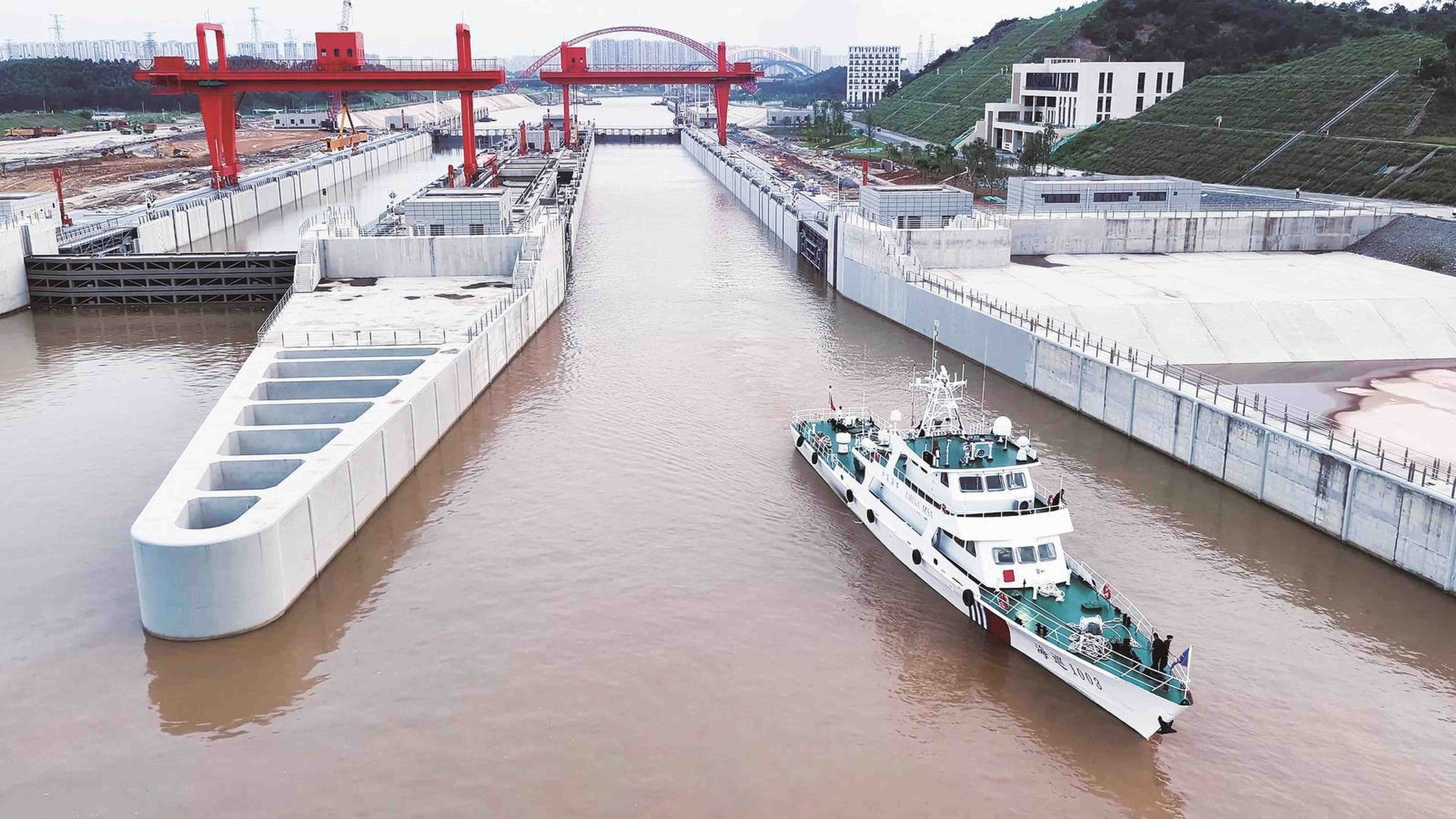
The canal serves as a primary artery for the New International Land-Sea Trade Corridor, bridging a geographic divide that has historically forced goods to detour through Guangdong. By enabling inland vessels to reach ports like Qinzhou directly, the project offers a significant logistical advantage over rail and road transport. Industry experts estimate that comprehensive logistics costs for companies along the route could fall by 18 to 30 percent, potentially resulting in annual savings exceeding 5 billion yuan.
Engineers overcame a 65-meter water-level drop by installing three cascade hubs—Madao, Qishi, and Qingnian—equipped with water-saving locks. These structures utilize a labyrinth buffer technology to manage vessel transit efficiently while preserving water resources. Beyond the economic utility, the project includes ecological restoration efforts, such as composite fishways that have successfully restored migration routes for over 10 aquatic species, and the reuse of nearly 98 percent of the 315 million cubic meters of excavated material for land reclamation and mine restoration.




Comments (0)
No comments yet. Be the first!