
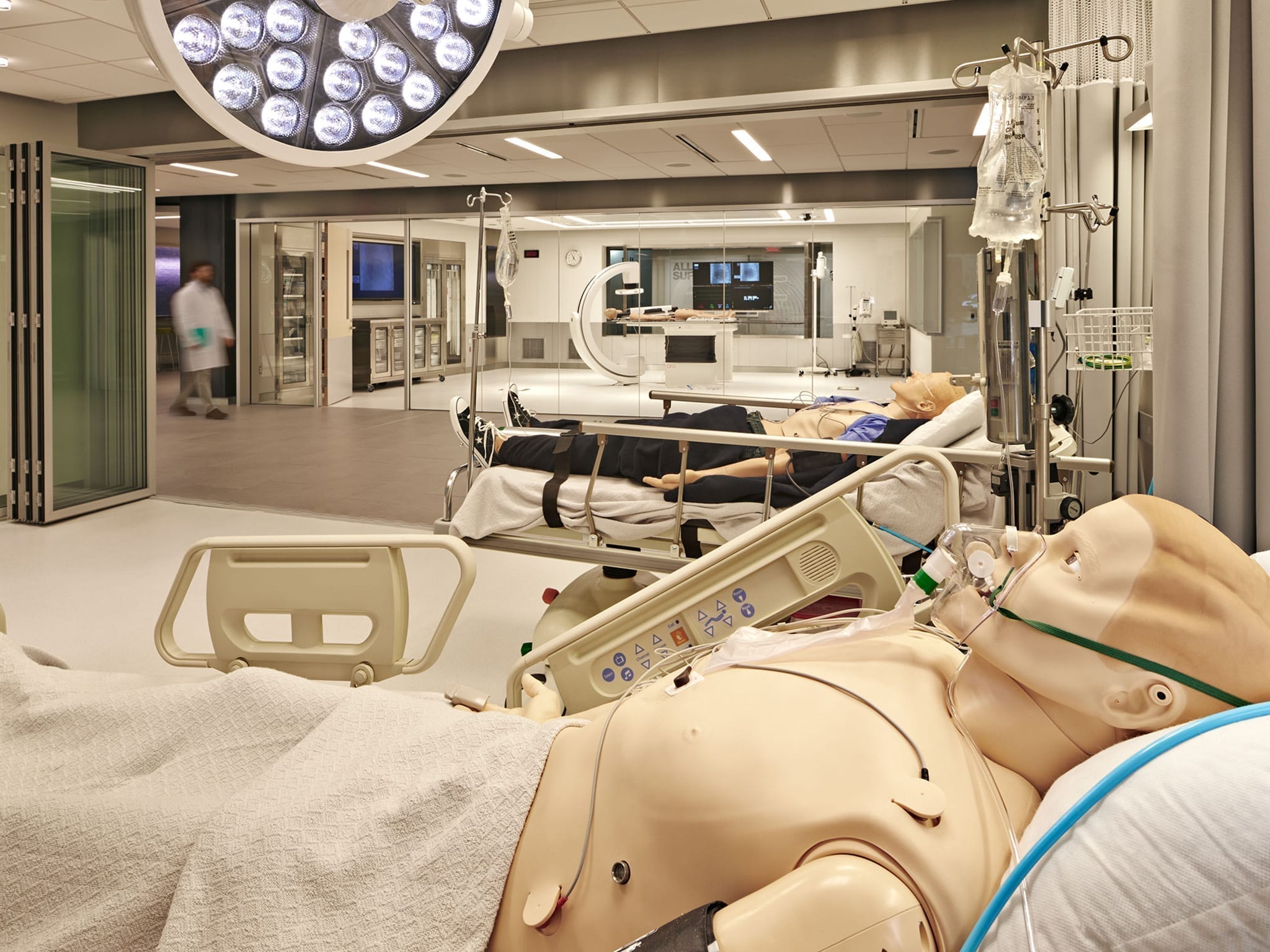
The facility features a full spectrum of hospital departments, including an emergency room, an intensive care unit, and a labor and delivery suite. By integrating artificial intelligence and advanced 3D printing into its makerspace, the university aims to move beyond traditional textbook learning. Students practice on lifelike medical manikins and engage with an Empathy Lab, which focuses on the soft skills required for delivering difficult diagnoses and managing high-stress team dynamics.
Dr. James Carlson, vice president for interprofessional education and simulation, noted that the center is designed to mirror the evolving nature of modern medical delivery. The university’s emphasis on interprofessional education means that nursing, pharmacy, and medical students work in tandem, reflecting the realities of collaborative care. Last year, nearly 1,500 students completed over 47,000 hours of simulation-based training at the institution.



Comments (0)
No comments yet. Be the first!